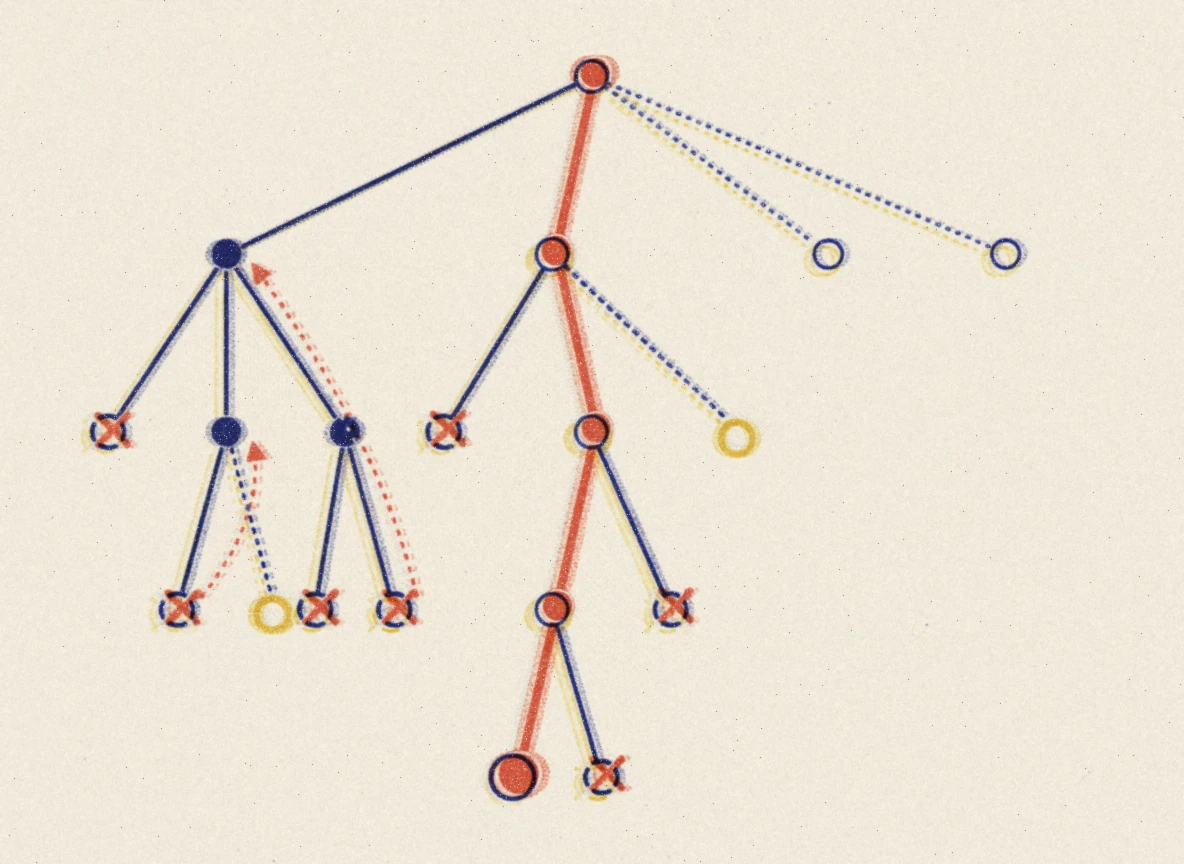
Henry Kautz’s taxonomy of neurosymbolic AI reaches its most ambitious form in Type 5, where symbolic rules work inside the neural network. Frontier models reach the world through interfaces that keep their internals closed, so that version of Type 5 cannot be built on them.
This paper asks what Type 5 should mean for models like these, and finds that the ambition survives. The stakes are clearest in work like a grant application, where one eligibility rule settled early decides whether everything after it counts. Our research on durable AI began here.
What we found
- A rule binds a model only if checking it is compulsory. Popular fixes leave the check to the model’s discretion and fall short; the paper proves that a compulsory check cannot be bypassed.
- A frontier model can be held to hard rules from the outside, with formal guarantees, as long as enforcement never depends on its own judgement.
- Some conditions cannot be settled on the evidence available. The framework keeps that ambiguity from turning into a wrong decision.
- The approach applies to any work where a frontier model has to reason under hard constraints and show that it is reliable.